I don’t want to dance
Dance with you baby no more
I’ll never do something to hurt you, though
Oh but the feeling is bad
The feeling is bad
I love your personality
But I don’t want our love on show
Sometimes I think it’s insanity
Girl the way you go
With all of the guys on the corner
Oh baby, you’re the latest trick
Oh, you seem to have their number
Look they’re dancing still
I don’t want to dance
Dance with you baby no more
I’ll never do something to hurt you, though
Oh but the feeling is bad
The feeling is bad
Baby now the party’s over
For us, so I’ll be on my way
Now that the things which moved me
Are standing still
I know it’s only superstition
Baby, but I won’t look back
Even though I feel your music
Baby that is that
I don’t want to dance
Dance with you baby no more
I’ll never do something to hurt you, though
Oh but the feeling is bad
The feeling is bad
Don’t want to dance
Don’t want to dance
Don’t want to dance
Don’t want to dance
Don’t want to dance
Don’t want to dance
Don’t want to dance
I don’t want to dance
Dance with you baby no more
I’ll never do something to hurt you, though
Oh but the feeling is bad
📀📀📀📀📀📀📀📀📀📀
Edmond Montague „Eddy“ Grant (* 5. März 1948 in Plaisance, Guyana) ist ein britischer Popmusiker, Sänger, Komponist und Gitarrist. Er wurde mit der Band The Equals, vor allem durch deren Superhit Baby Come Back von 1968, bekannt.
Grants Familie zog 1960 von Guyana nach London. Er wurde Mitbegründer der Gruppe The Equals, die zwischen 1967 und 1971 etliche Hits hatte. Im Alter von 23 Jahren erlitt Grant einen Herzinfarkt, der ihn zum Kürzertreten zwang. Er verlegte sich aufs Produzieren und gründete sein eigenes Studio, Coach House, sowie sein eigenes Plattenlabel, Ice Records.
Mitte 1979 hatte Grant mit Living on the Frontline seinen ersten Single-Hit. Er baute in Barbados das Studio Blue Wave auf, um wieder bei seiner Familie zu leben, die zuvor in die Karibik gezogen war. Auf Barbados produzierte Grant unter anderem Mick Jagger, Sting und Elvis Costello.
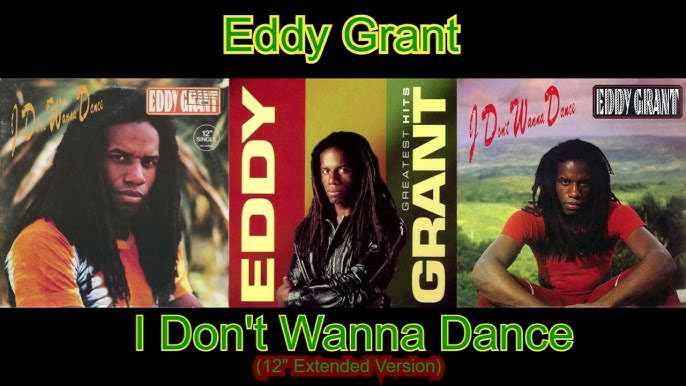
Der endgültige Durchbruch gelang Ende 1980 mit Do You Feel My Love. Dieser Hit war Teil des Albums Can’t Get Enough, von dem auch die Hitsingles Can’t Get Enough of You und I Love You Yes, I Love You stammen. Mit dem im Herbst 1982 erschienenen Album Killer on the Rampage blieb Eddy Grant auf Erfolgskurs. Die Auskopplungen I Don’t Wanna Dance, Electric Avenue und War Party erreichten vordere Plätze in mehreren Musikcharts.
Mitte 1984 kam das Album Going for Broke in den Handel. Die beiden Singles daraus, Till I Can’t Take Love No More und Romancing the Stone, wurden die nächsten Charterfolge. Anfang 1985 nahm Grant Baby Come Back neu auf. Als Gitarrist seiner ehemaligen Band, The Equals, hatte er 1967/1968 mit diesem Lied einen weltweiten Hit. Diesmal reichte es für Platzierungen in Deutschland und der Schweiz.
Gimme Hope Jo’anna war der einzige Hit vom Album File Under Rock (1988); er kam in vielen europäischen Singlecharts in die Top 10. Walking on Sunshine erreichte eine mittlere Position in den UK-Charts. Erst 2001 gelang mit einem Remix des Liedes Electric Avenue ein weiterer Charterfolg. Zuletzt kam Grant ins Gespräch, als er die britische Band Gorillaz des Plagiats bezichtigte: Deren 2010 erschienene Single Stylo sei mit seiner 1982 herausgekommenen Nummer Time Warp identisch. Der Streit konnte erst 2023 geschlichtet werden.
 Schönes aus unserer Kindheit